Learning Disabilities Awareness Day
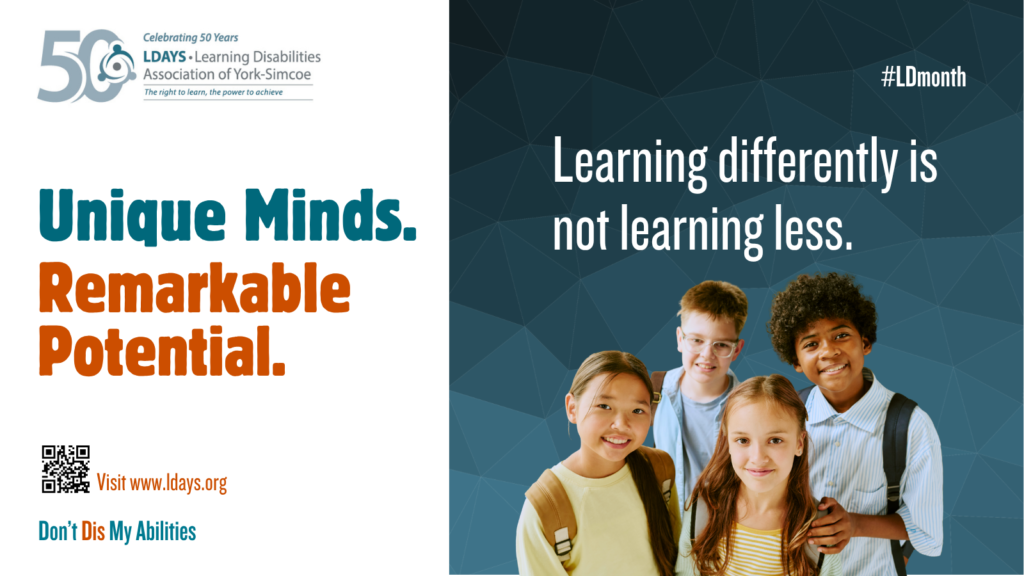
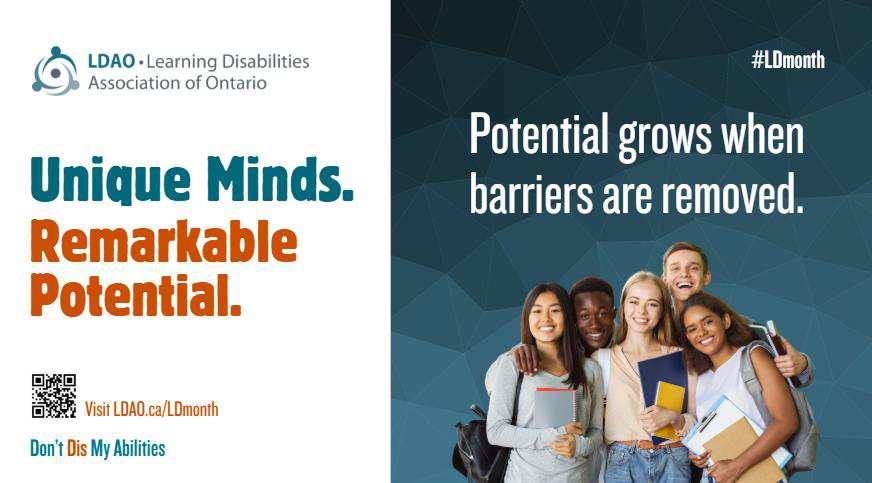
This year, our LD Awareness Month campaign is built around the message Unique Minds. Remarkable Potential.TM Don’t DIS My Abilities remains a recognizable connection to the campaign’s history. At its heart, the campaign is about helping people better understand learning disabilities and ADHD, reducing stigma and misunderstanding, and recognizing what is possible when individuals are understood, supported, and able to advocate for what they need.
Throughout October, we are inviting chapters, schools, educators, municipalities, community partners, individuals, and families to help bring that message to life. This package provides practical, ready-to-use tools for sharing information, telling local stories, engaging communities, and participating in LD Awareness Day on October 15.
What We Want People to Know
Awareness starts with understanding. Throughout LD Awareness Month, we want to help people better understand learning disabilities and ADHD, recognize strengths, needs, and abilities, challenge misconceptions, and see how appropriate supports and accommodations can remove barriers.
What is a Learning Disability? Learning disabilities affect how people take in, process, or use information. They are brain-based differences, not a reflection of intelligence or effort, and with the right supports, individuals with LDs can thrive in school, work, and life.
What is ADHD? Attention-Deficit/Hyperactivity Disorder (ADHD) is a brain-based condition that affects attention, self-regulation, and impulse control. People with ADHD may find it harder to focus, stay organized, or manage time, but these challenges are not a reflection of intelligence, ability, or effort. With understanding and the right supports, individuals with ADHD can thrive in school, work, and daily life.
What We Want People to Take Away
•See strengths as well as needs. Individuals with LDs and ADHD bring strengths, abilities, perspectives, and potential. Understanding individual needs helps create the conditions for success.
•Support and accommodations create access. Appropriate supports, accommodations, technology, and evidence-based approaches help remove barriers. They do not lower expectations or provide an unfair advantage.
•Removing stigma and barriers strengthens inclusion. When misconceptions and barriers are reduced, individuals with LDs and ADHD are better able to participate, contribute, advocate for what they need, and thrive in school, work, and community life.
Together, these messages support LDAO’s broader work to advance understanding, inclusion, access, and meaningful participation for people with LDs and ADHD.